Existing Patients:
(201) 891-5888
New Patients:
(201) 258-3284

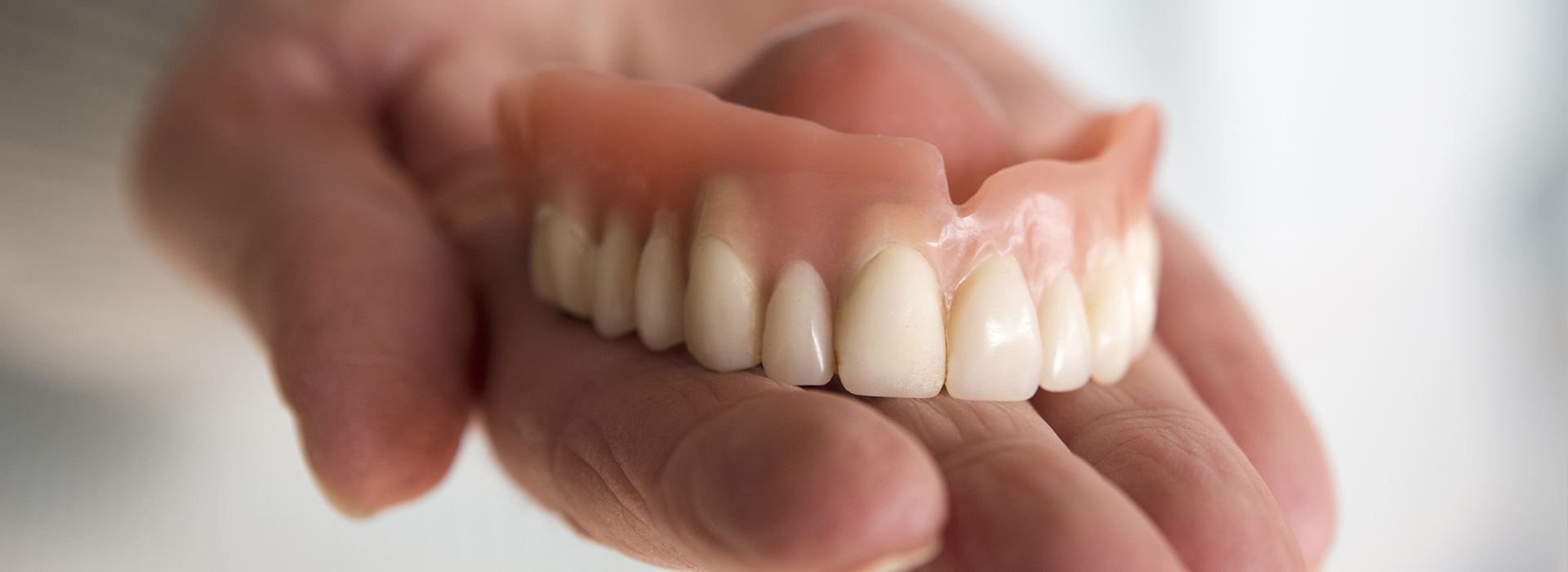
Modern dentures provide a reliable, natural-looking way to replace missing teeth. While implants and bridges are great options in many cases, removable dentures remain a versatile and effective solution for restoring comfort, appearance, and daily function.
At Schulman Dental Studio, Franklin Lakes, we design dentures that balance aesthetics, fit, and long-term oral health so patients can speak, eat, and smile with confidence.
Missing teeth affect chewing, speech, and facial structure. Gaps allow nearby teeth to shift and can lead to bite problems, jaw strain, and changes in facial appearance.
Replacing teeth with a well-fitted denture helps restore proper function while supporting the surrounding tissues and remaining teeth.
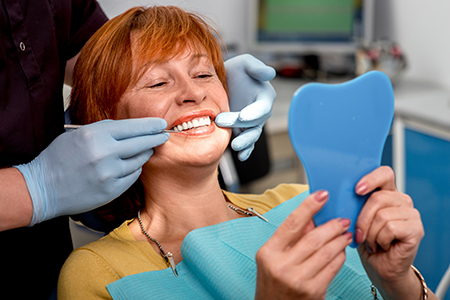
A denture is a removable appliance that replaces missing teeth and the supporting gum structure. It restores chewing ability, supports facial features, and recreates a natural-looking smile.
Because dentures are removable, they are easy to clean and help protect the health of your gums and remaining teeth.
Dentures are designed based on how many teeth are missing and how much support is needed. Options range from full dentures that replace an entire arch to partial dentures that fill specific gaps.
In some cases, overdentures or implant-supported dentures provide added stability while remaining removable for cleaning.
Full dentures replace all teeth in an upper or lower arch, while partial dentures attach to remaining teeth to fill gaps and maintain bite alignment.
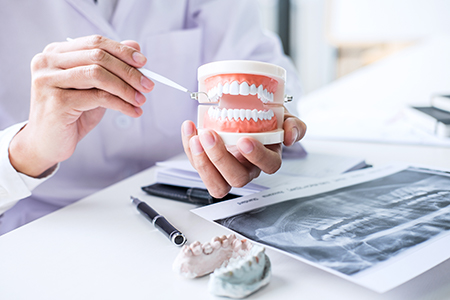
We begin with a detailed exam, scans, and impressions to evaluate bone, bite, and facial structure. Tooth shape, shade, and placement are carefully selected for a natural appearance and balanced function.
You’ll go through fitting and try-in stages before your final denture is delivered and adjusted for comfort and stability.

It’s normal to need a short adjustment period for speech and chewing. Follow-up visits allow us to refine the fit and relieve pressure points.
Daily cleaning, removing dentures at night, and routine dental checkups help maintain both the appliance and the health of your mouth. Adhesives or implant attachments can be added for extra stability when needed.
Dentures provide a practical, natural-looking way to restore missing teeth. Contact Schulman Dental Studio, Franklin Lakes to explore which denture option is right for you.
Today, it’s easier than ever to replace missing teeth and achieve natural-looking, durable, and long-lasting results! Depending on a patient’s dental needs, lifestyle, expectations of care, and budget, choices can include conventional fixed bridgework, dental implants, or removable partial and complete dentures. At the office of Schulman Dental Studio, Franklin Lakes, we’ll discuss all your options in care and answer all your questions as you choose the solution that’s right for you.
With advances in dental materials and technology, today’s dentures are more comfortable and realistic-looking than ever before.
Whether you wear partial or complete dentures, it’s essential to see the dentist for routine care. Besides checking the fit and condition of your dentures and making any necessary adjustments, you’ll also receive a comprehensive exam to check on the health of any remaining teeth as well as the soft and hard tissues in and around the oral cavity.
A same-day denture offers an accelerated design and fabrication process that allows a patient to go from impression taking to denture insertion in a single day.
For patients who don’t want to wait after having teeth extracted, an immediate denture can be inserted the same day your teeth are removed. Sometime later you may need the denture relined to address any changes in its fit once the extraction sites have completely healed.
While no one wants to drop or break a partial or complete denture, accidents do happen. The good news is that in some cases, your partial or complete denture is reparable. It all depends on the extent of the damage. Don’t hesitate to contact our office if you’ve broken or damaged your denture. We’re happy to help.
The simple act of taking your partial denture in and out can cause certain types of metal clasps to loosen over time. When you come in for your checkup visit or contact our office for an adjustment, we’ll assess the fit of your partial and tighten the clasps for improved stability and comfort.
While rebuilding a complete smile is a worthwhile investment, our office is sensitive to the costs involved in dental care. We customize care and will discuss which treatment options address your needs, lifestyle, and budget. How much a new denture will cost depends on the type of the prosthesis, its design, and the materials used to fabricate the supportive base, teeth, and clasps or precision attachments. Dentures that include the placement of dental implants for added retention and stability typically involve additional costs.
If you have dental insurance, your coverage may include a new or replacement set of dentures. Our staff is happy to review your coverage with you to ensure you are maximizing your insurance benefits while minimizing any out of pocket expenses.
At the office of Schulman Dental Studio, Franklin Lakes, we provide an extensive range of dental services, including the latest and most effective methods to help patients with missing teeth rebuild complete and beautiful smiles. As skilled and experienced professionals, we recognize that every patient is different, and every smile is unique. We’re passionate about what we do and take great pride in providing personalized treatment plans while treating our patients as valued partners in care.
A denture is a removable dental prosthesis that replaces missing teeth and the underlying gum and bone structures. It typically consists of artificial teeth set into a contoured base that fits the mouth and restores the vertical height lost when teeth are missing. Well-designed dentures restore chewing ability, support facial tissues, and help improve speech by recreating a natural tooth arrangement.
Modern dentures are made from advanced acrylics, resins, and tooth materials that mimic natural color and translucency. They are customized to a patient’s bite and facial proportions so function and appearance work together. At Schulman Dental Studio, Franklin Lakes, we focus on crafting appliances that balance comfort, stability, and long-term oral health.
Full, or complete, dentures replace an entire upper or lower arch when all natural teeth in that arch are missing. Partial dentures fill one or more gaps while preserving healthy remaining teeth and typically attach with clasps or precision attachments. The two designs serve different clinical needs: full dentures recreate an entire arch, whereas partials protect adjacent teeth from drifting and help maintain an even bite.
Partial frameworks may be made from cast metal, flexible resins, or hybrid materials chosen for strength and comfort. Full denture bases are contoured to the gums and underlying tissues to provide broad support and suction on the upper arch. Your dentist will recommend the option that best preserves oral health while meeting your functional and aesthetic goals.
A conventional denture is fabricated after extractions and healing are complete so the appliance fits the healed tissues precisely. An immediate denture is placed the same day teeth are removed so patients are not without teeth during healing, but it often requires adjustments and relines as tissues remodel. Each option has trade-offs between convenience and the need for later refinement.
Stabilized options include overdentures that gain support from remaining tooth roots or attachments on implants and implant-supported removable dentures that hitch to implant posts for improved retention. These hybrid approaches combine the ease of a removable prosthesis with greater chewing efficiency and stability. Your clinician will explain which approach best suits your anatomy, lifestyle, and long-term oral health needs.
Implant-supported dentures attach to dental implants that are placed in the jaw, which provides enhanced retention and chewing power compared with conventional removable appliances. Some implant options secure a denture with clips or bars while others allow a removable overdenture to snap into place for daily cleaning. The increased stability can make it easier to eat firmer foods and speak with confidence.
Unlike fixed implant bridges, many implant-supported dentures remain removable for hygiene, which lets patients clean both the prosthesis and the underlying tissues. Implant-retained solutions require healthy bone where implants are placed and a coordinated treatment plan that includes surgical placement. Your dentist will discuss the clinical steps and maintenance needs if implant support is recommended.
Adults who have lost multiple teeth, an entire arch, or who have teeth that cannot be predictably restored may be candidates for dentures. A thorough clinical exam, review of medical history, and imaging help determine whether a removable prosthesis is the most appropriate option. Factors such as the health of remaining teeth, gum and bone condition, and patient expectations all inform the recommendation.
Patients with well-controlled medical conditions and adequate oral tissue health can often wear dentures successfully, though some medical issues may require additional planning. When suitable, dentures can improve nutrition, speech, and facial support while protecting remaining teeth and soft tissues. Your dentist will review alternatives like partial bridges or implant-supported prostheses when those options are clinically feasible.
Denture planning begins with a detailed oral exam, medical and dental history review, and often imaging or digital scans to evaluate bone and tissue anatomy. The process typically includes diagnostic records, impressions or intraoral scans, bite registration, and a series of try-ins so tooth position, color, and occlusion can be evaluated before final fabrication. These steps let the laboratory and clinical team tailor the denture to your face, speech, and functional needs.
Throughout fabrication you will return for adjustments and try-ins to ensure fit and aesthetics meet your goals, and any recommended extractions or pre-prosthetic procedures are coordinated with the final plan. Our team at Schulman Dental Studio, Franklin Lakes emphasizes clinical refinement and clear follow-up so the finished prosthesis performs well in daily life. Clear communication at each stage helps achieve a comfortable, predictable outcome.
Daily denture care begins with rinsing the appliance after meals to remove food debris, followed by gentle brushing with a denture brush and an appropriate cleaner to prevent staining and buildup. Avoid using regular toothpaste on acrylic dentures because it can be abrasive; instead use a product designed for prosthetics or a mild soap. When not in use, dentures should be stored in water or a recommended soaking solution to prevent warping and to keep them hygienic.
It is equally important to clean any remaining natural teeth and the gums to protect oral tissues and support the fit of the prosthesis. Remove dentures at night unless otherwise directed so tissues can rest, and bring them to dental appointments for professional assessment and cleaning. If adhesives are needed, your clinician can recommend safe use and proper application to enhance retention temporarily.
Adjustment to new dentures varies by individual but most patients become comfortable with speech and chewing over a few weeks to a couple of months. Early follow-up visits are important to identify and correct sore spots, refine occlusion, and improve stability so normal function returns more quickly. Mild increases in saliva and initial pressure points are common and usually subside as the mouth adapts.
Practicing reading aloud, speaking slowly, and eating soft, bite-sized foods while chewing evenly on both sides can accelerate adaptation. Gradually reintroduce firmer foods as confidence grows and contact the office promptly if persistent discomfort, mobility, or functional problems occur. Timely adjustments from your dentist help avoid long-term issues and make daily use more comfortable.
Changes in the oral tissues and bone can cause dentures to become loose or uncomfortable over time, which is why routine checkups are essential. Signs that a denture needs attention include persistent sore spots, slipping during speech or chewing, changes in bite relationships, or visible wear of the teeth. Small fit issues are often resolved with adjustments or relines, which adapt the existing base to the current shape of the mouth.
In some cases, extensive wear, repeated repairs, or significant changes in facial support indicate that a new denture is the best option to restore proper function and aesthetics. Regular dental visits let your clinician monitor tissue health and recommend preventive relines or repairs before problems escalate. Early intervention helps maintain comfort, chewing efficiency, and oral health.
Common denture-related issues include sore spots from pressure, loose fit due to tissue changes, difficulty chewing certain foods, and temporary speech changes. Many of these problems are resolved by clinical adjustments, relines, or minor repairs that restore proper fit and eliminate pressure points. In the case of persistent instability, adding attachments or converting to an implant-retained solution may be recommended to improve retention.
Oral hygiene lapses can lead to tissue irritation or infections under the denture, so keeping both the appliance and the gums clean is crucial. If you notice pain, persistent redness, or sores, schedule an evaluation so the cause can be treated and the denture modified as needed. Prompt care preserves tissue health and helps the prosthesis continue to perform well.