Existing Patients:
(201) 891-5888
New Patients:
(201) 258-3284
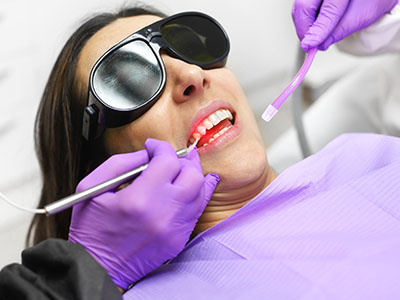
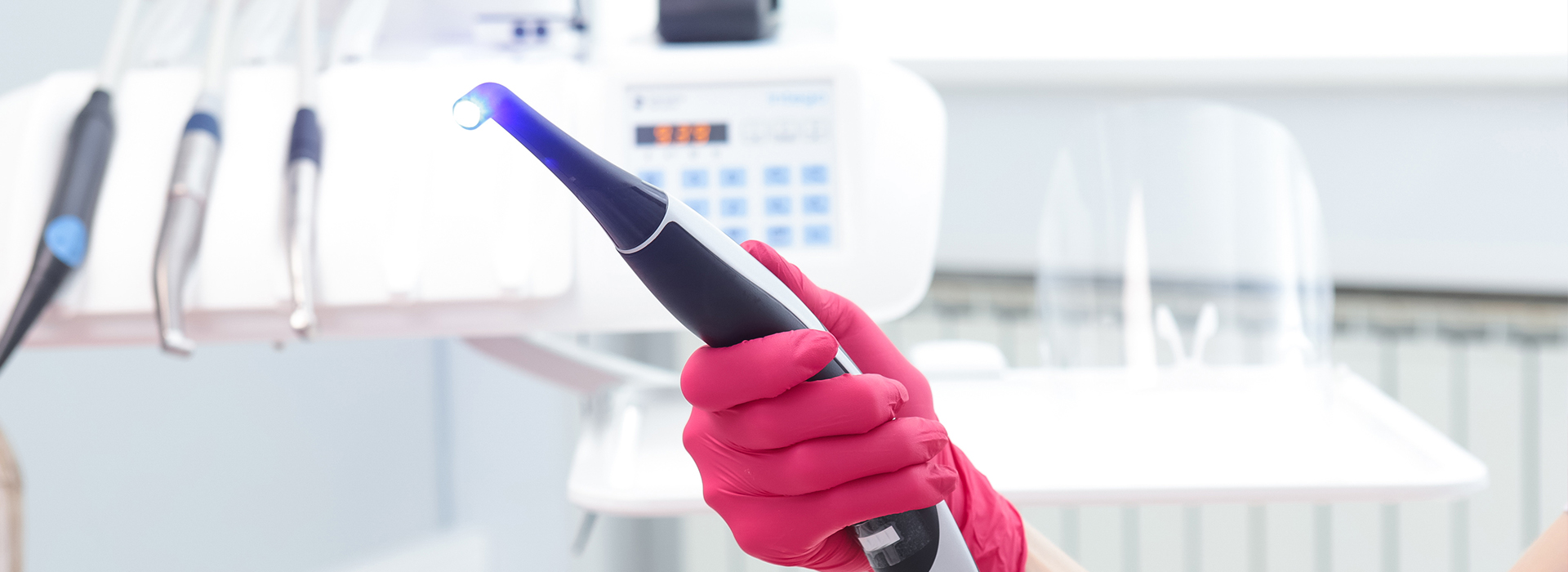
Laser dentistry uses focused light energy to treat teeth and gums with high precision. Different lasers are used for different tasks, allowing dentists to remove decay, reshape tissue, reduce bacteria, and enhance certain treatments with less impact on healthy structures.
When used by trained clinicians, lasers complement traditional dental tools to create more comfortable, conservative care.
Lasers target only the tissue that needs treatment, helping preserve healthy tooth and gum structure.
Many patients experience less discomfort, less bleeding, and faster healing compared to traditional techniques, and some procedures require little or no anesthesia.
Lasers can remove decay, treat infected gum pockets, reshape gum tissue, and improve smile aesthetics.
They are also used for whitening activation, tissue sampling, and bacterial reduction to support healing and oral health.
Dental lasers include built-in safety controls and are used following strict clinical protocols. Dentists who offer laser treatment receive specialized training to ensure proper settings and safe outcomes.
Lasers are often combined with digital imaging and diagnostics to plan precise, predictable treatment.
While lasers offer many advantages, they aren’t appropriate for every procedure. Your dentist will evaluate your needs and explain whether laser therapy fits your treatment plan.
If you’re interested in laser dentistry, contact Schulman Dental Studio, Franklin Lakes to learn how this technology may benefit your care.
Laser dentistry uses focused light energy to interact with oral tissues at a cellular level, allowing clinicians to cut, vaporize, disinfect, or stimulate healing with precision. Different lasers emit specific wavelengths that are absorbed by targeted tissues, so the device and settings are chosen to match the clinical objective. Because energy is delivered in controlled pulses or continuous beams, lasers can perform tasks with less collateral damage to surrounding healthy tissue than some traditional instruments.
The technique requires trained clinicians who understand tissue response, proper calibration, and safety protocols. Laser systems often include built-in controls for power, pulse duration, and cooling to regulate interactions with soft and hard tissues. When used as part of a tailored treatment plan, lasers can complement conventional tools to improve accuracy and patient comfort.
The most common dental lasers include diode, erbium, and CO2 systems, each designed for particular tissue interactions. Diode lasers are typically used for soft-tissue procedures and disinfecting periodontal pockets because their wavelengths are well absorbed by pigmented tissue and hemoglobin. Erbium lasers can ablate both enamel and dentin as well as soft tissue, making them useful for conservative cavity preparation and certain surgical tasks, while CO2 lasers excel at soft-tissue cutting and coagulation with precise vaporization.
Choice of laser depends on the clinical goal, such as cutting versus coagulating, sterilizing, or activating whitening gels. Manufacturers provide recommended settings, but effective use also depends on clinician training and experience. Understanding these differences allows practitioners to select the laser that best preserves healthy structure while addressing the specific problem.
Lasers are versatile and support a wide range of procedures including soft-tissue reshaping, removal of oral lesions, periodontal pocket decontamination, and adjunctive cavity preparation. They are commonly used for gum contouring, frenectomies, and to reduce bacterial load in cases of gingivitis or periodontitis. In restorative settings some lasers can remove decayed tooth structure and prepare surfaces for bonding, while others are used to activate in-office whitening gels for brighter smiles.
Despite their versatility, lasers are not a universal replacement for every dental technique and are often used alongside traditional instruments. Complex restorative work, extensive surgical cases, or situations requiring certain materials may still rely primarily on conventional approaches. A measured, case-by-case decision ensures lasers are applied where they add the most clinical value.
Many patients experience less vibration and pressure with laser procedures because lasers often cut without the mechanical action of a drill, which can reduce anxiety for those sensitive to noise and movement. In several soft-tissue applications, lasers cauterize as they cut, diminishing bleeding and the need for sutures, which contributes to a more comfortable postoperative course. Some laser treatments require little or no local anesthesia, though the need for numbing is determined by the specific procedure and patient comfort.
Comfort advantages depend on the case, clinician skill, and the type of laser used; they are not guaranteed for every intervention. Dentists evaluate each patient’s needs and may combine laser therapy with conventional techniques to optimize both comfort and clinical outcome. Clear preoperative explanations help patients understand what sensations to expect during and after treatment.
Laser dentistry is safe when devices are operated according to manufacturer guidelines and by clinicians trained in laser physics and tissue interactions. Standard safety measures include protective eyewear for the patient and staff, controlled room access, and adherence to recommended power and pulse settings to avoid unintended tissue damage. Regular maintenance, calibration, and sterilization of handpieces and accessories are also essential to ensure consistent, predictable performance.
Clinicians complete formal laser training and continuing education to stay current with best practices and evolving technology. Treatment planning includes an assessment of indications and contraindications, and dentists will choose laser settings and adjunctive techniques to minimize risk. These steps protect patient health while allowing clinicians to take advantage of the technology’s benefits.
Laser therapy can accelerate healing in many soft-tissue procedures because lasers often promote coagulation, reduce bacterial counts, and cause less trauma to adjacent tissues. Reduced bleeding and a cleaner surgical field lower infection risk and typically result in less swelling and postoperative discomfort. In some cases patients resume normal activities sooner than with comparable traditional surgical approaches.
Healing outcomes depend on the procedure type, patient health, and adherence to postoperative care instructions. While lasers can improve recovery in many applications, they do not eliminate the need for proper wound care or follow-up appointments. Dentists provide individualized guidance to support optimal healing and monitor progress after any laser intervention.
Yes, lasers are used as an adjunct in periodontal therapy to help decontaminate pockets, remove diseased tissue, and stimulate a healing response in the surrounding tissues. Laser-assisted procedures can reduce bacterial load and facilitate access for scaling and root planing, which may enhance the effectiveness of non-surgical periodontal care. Some patients experience reduced bleeding and discomfort when lasers are incorporated into the treatment plan.
Clinical evidence supports laser use as a complementary approach rather than a standalone cure for advanced periodontal disease in many cases. Successful outcomes depend on comprehensive care that includes professional cleaning, home hygiene, and regular monitoring. Your dentist will discuss whether laser-assisted periodontal therapy fits your individual condition and long-term maintenance needs.
Certain lasers, particularly erbium systems, can remove decayed tooth structure and prepare cavities for bonded restorations, allowing more conservative removal of diseased tissue. Laser-prepared surfaces can be favorable for some adhesive materials, and the precision of the tool helps preserve more healthy enamel and dentin. However, not all lasers can manage all types of cavities, and clinicians choose the method that best supports a durable restorative outcome.
For larger or deep restorations, traditional rotary instruments or a hybrid approach may still be preferable to achieve optimal access and restorative material handling. The dentist evaluates lesion size, location, and restorative needs when deciding whether to use a laser. This clinical judgment ensures restorative longevity while maximizing tooth preservation.
Good candidates for laser dentistry include patients seeking minimally invasive soft-tissue treatments, those who prefer reduced bleeding and faster recovery, and individuals who experience anxiety with traditional drills. Patients with localized oral lesions, requiring gum contouring, or needing adjunctive periodontal therapy often benefit from laser options. Age alone is not a barrier, and many procedures are appropriate for children as well as adults when clinically indicated.
Not every patient or condition is suitable for laser therapy; extensive hard-tissue work, deep caries that extend beneath the gum line, or some complex surgical cases may still require conventional techniques. Certain medical conditions or medications can affect healing and may influence the choice of treatment. During an exam the dentist assesses overall health, oral anatomy, and treatment goals to recommend the safest, most effective approach.
During a consultation the clinician reviews your medical and dental history, performs a clinical exam, and discusses the goals and limitations of laser therapy for your specific needs. Imaging or intraoral scanning may be used to gather detailed information that helps guide whether a laser is appropriate and which type would be optimal. The dentist explains the proposed procedure, any preparatory steps, and what sensations you might experience during treatment so you can make an informed decision.
If laser therapy is selected, the team will review safety precautions such as protective eyewear and outline postoperative care and follow-up. Clinicians calibrate the device and select settings based on the tissue type and treatment objective to maximize precision and minimize discomfort. At Schulman Dental Studio, Franklin Lakes, our clinicians combine modern laser technology with established protocols to integrate lasers into individualized treatment plans when appropriate.